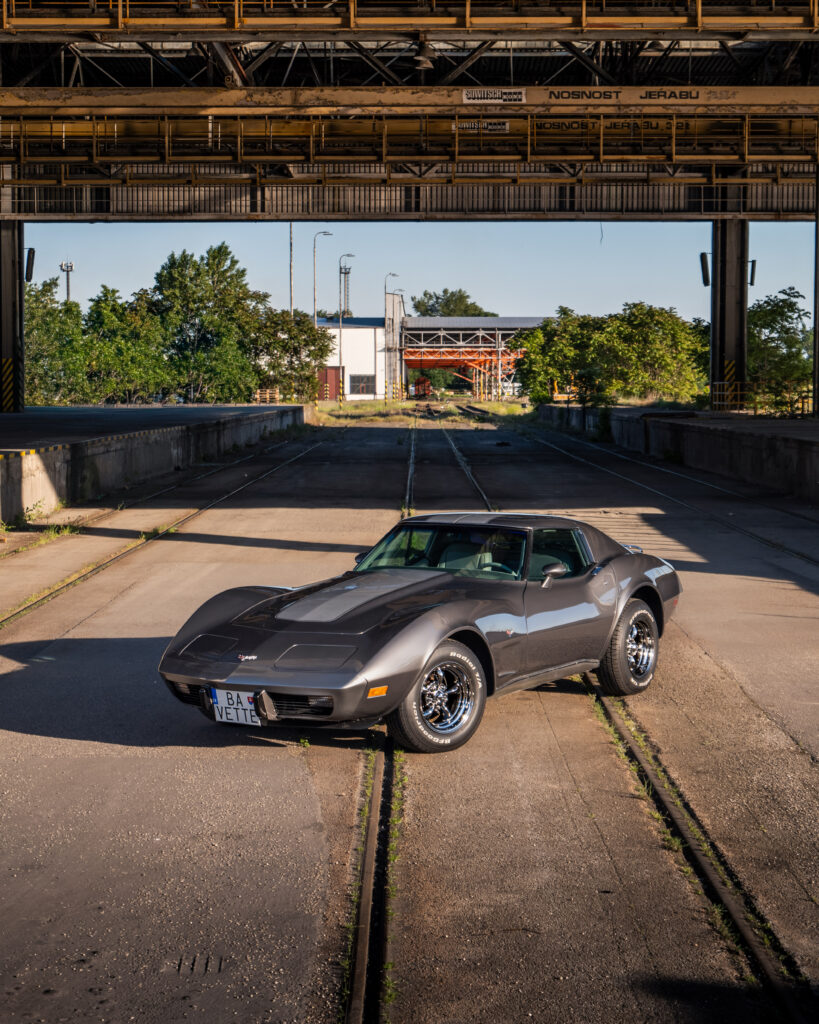
In 1968 Chevrolet took a show car, gave it a number plate and sold it to anyone with a driving licence and a bank loan. For fifteen years the Corvette C3 was the American sports car. It was loud, long, a little unruly and impossible to ignore.
It came from an era with no driver modes, no screens and no apps. Just a V8, a long hood and a gear lever with a cue ball on top. Nearly five decades later, that’s exactly why people still stop and stare.
A show car you could buy
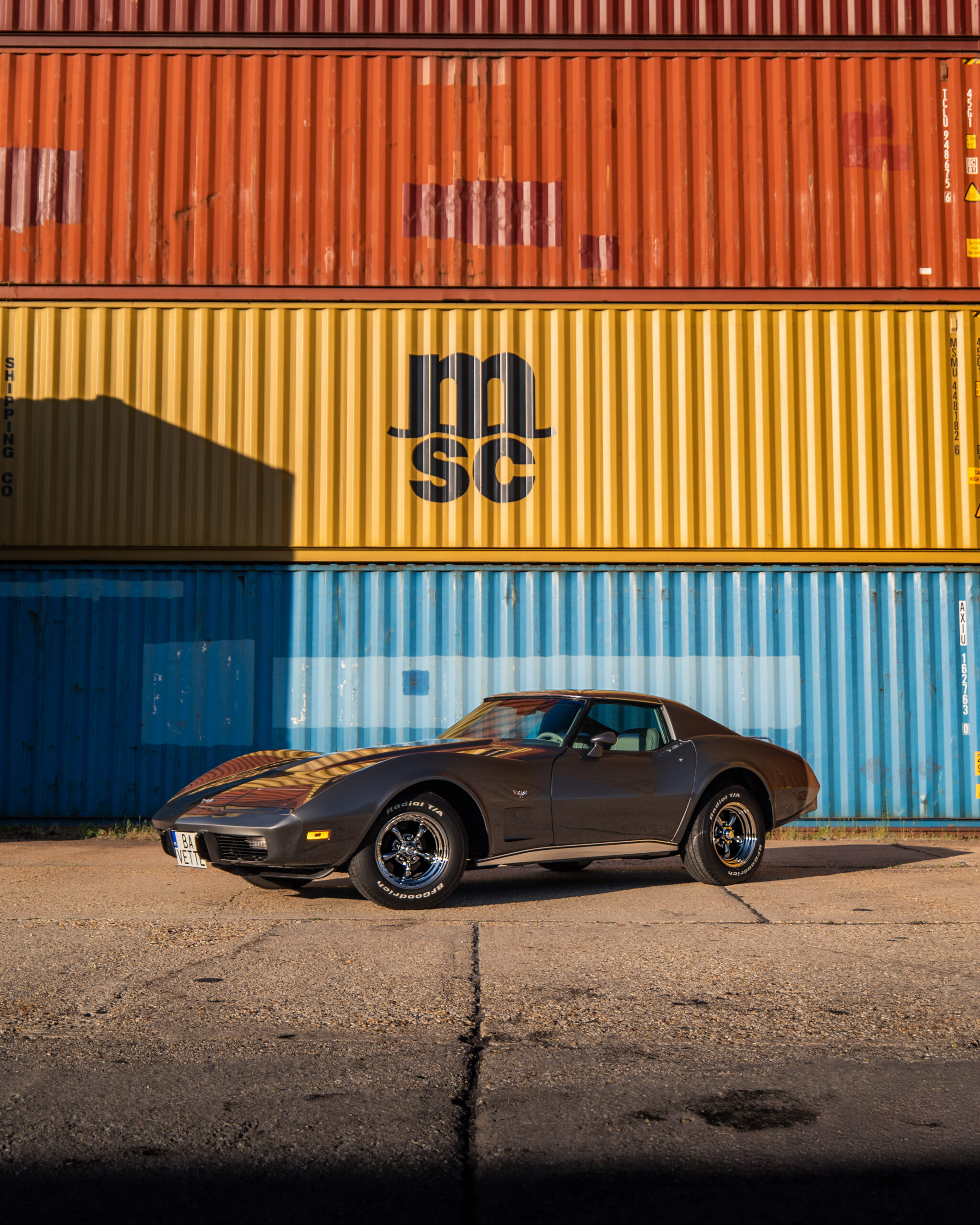
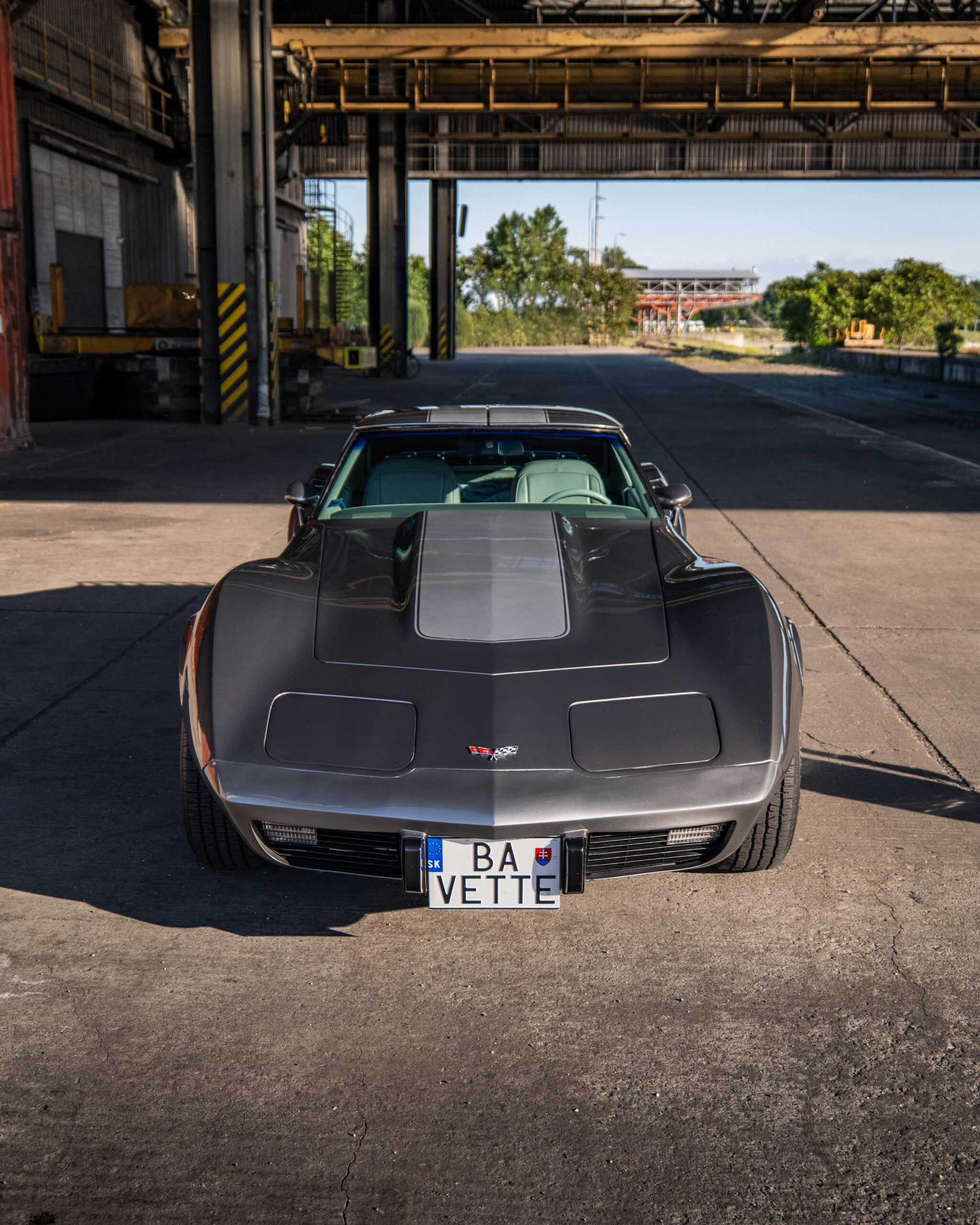
The story starts with the Mako Shark II, a concept car GM’s design chief Bill Mitchell unveiled in the mid-sixties. Its shape, drawn largely by Larry Shinoda, was pure drama, with a pointed nose, fenders that rose like waves over the wheels and a narrow, pinched waist. Chevrolet decided the next Corvette should look just like it.
Turning a show car into a road car was harder than it looked. Under the new fiberglass body sat a chassis carried over from the previous Sting Ray, and chief engineer Zora Arkus-Duntov’s team had to make the dramatic shape work with real cooling, real luggage and real people inside. The first cars of 1968 drew criticism for their build quality and a cramped cockpit. Buyers didn’t care. They queued anyway.
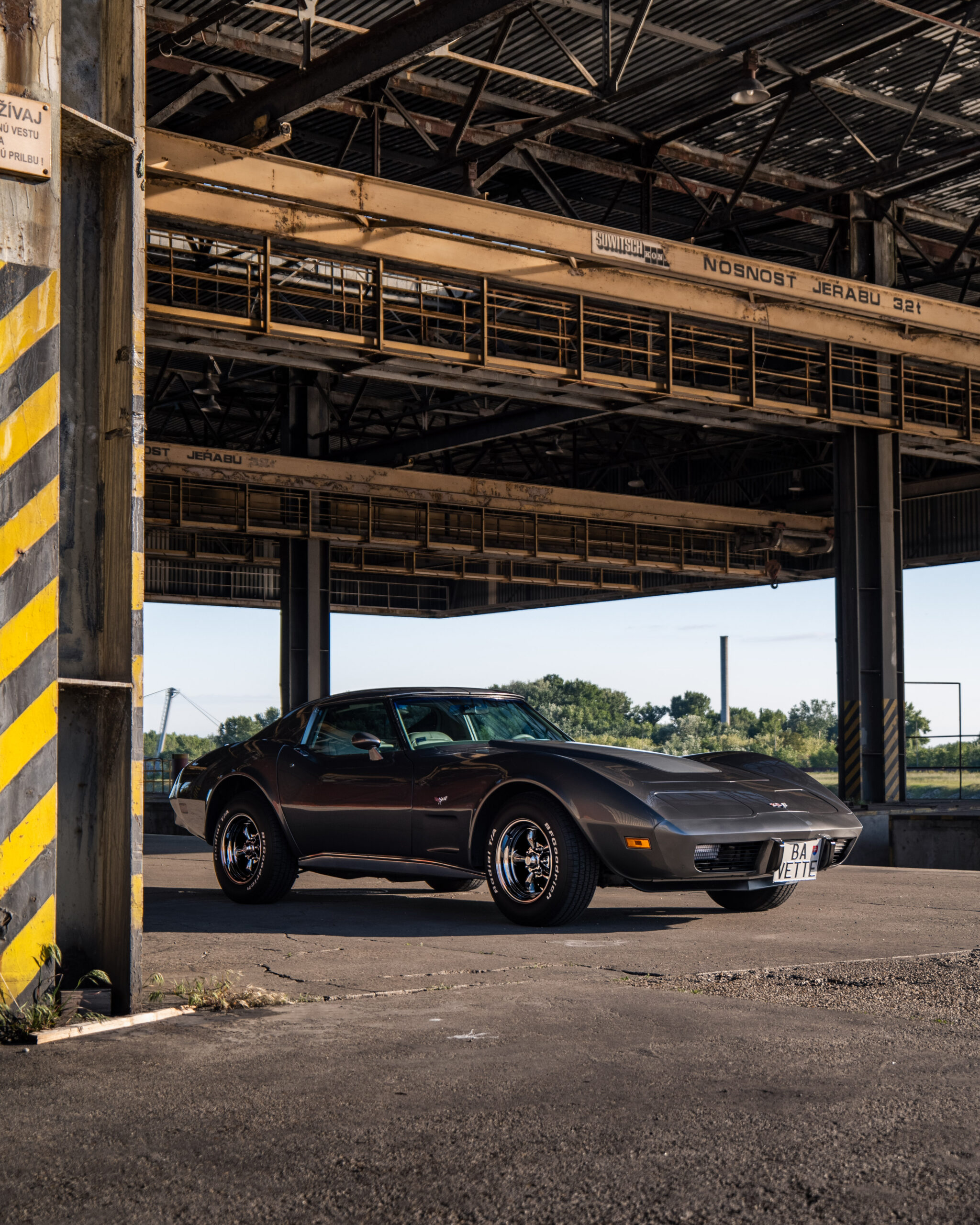
From big blocks to rubber bumpers
The early C3 was a muscle car in a tailored suit. Big-block V8s grew from 427 to 454 cubic inches, and in 1971 the wildest LS6 version was rated at 425 horsepower on the generous gross scale of the time. Then the seventies arrived with a rule book.
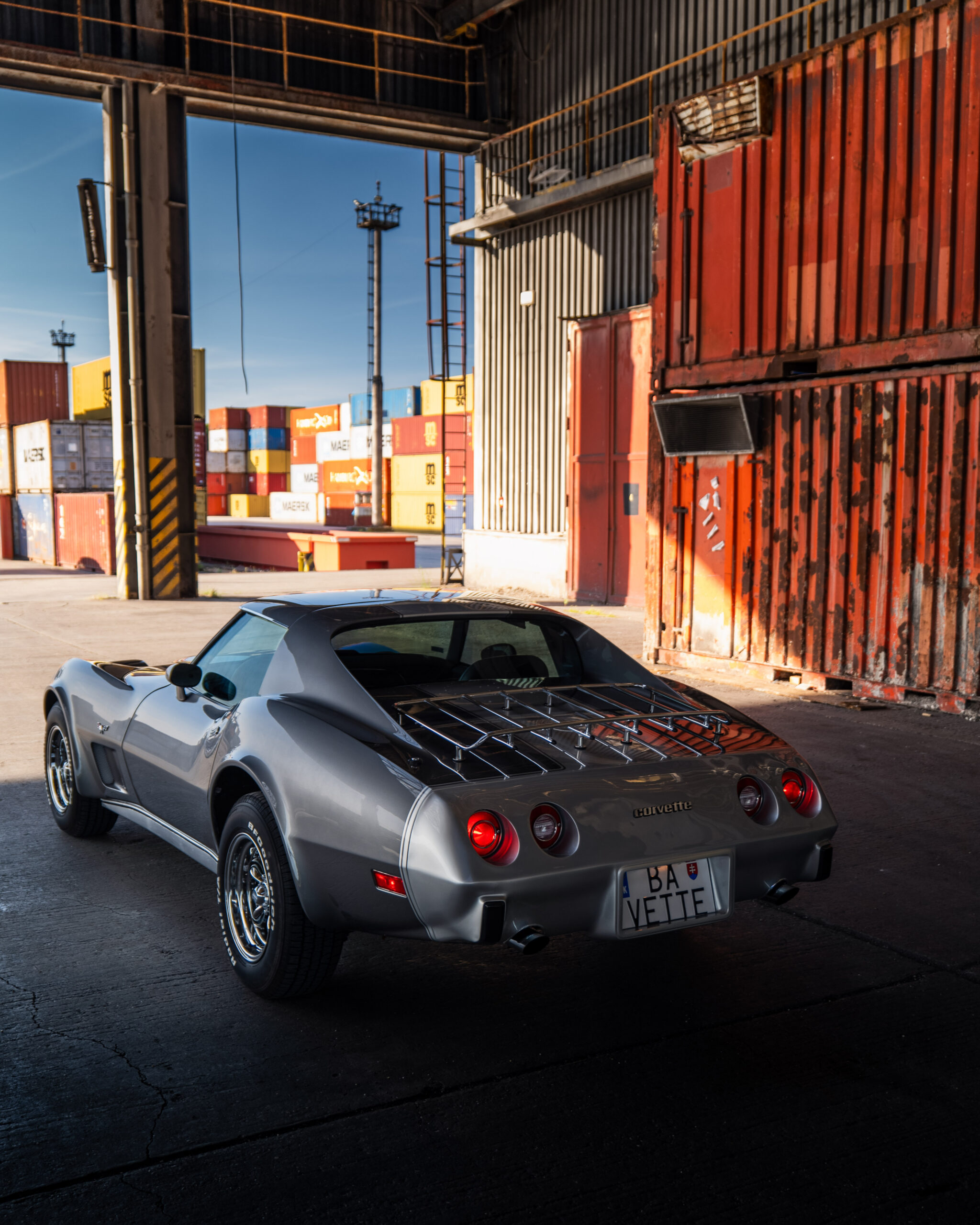
Emission limits, unleaded fuel and new crash standards hit the Corvette one after another. Chrome bumpers gave way to soft, body-coloured covers, at the front for 1973 and at the rear for 1974. The big blocks disappeared, catalytic converters arrived for 1975, and that same year the convertible was dropped. By 1976 the standard 350 cubic-inch V8 made around 180 horsepower.
On paper it looked like decline. In the showroom it was the opposite. The Corvette sold better than ever, and 1977 became its best year so far with more than 49,000 cars built. The C3 had stopped being a drag-strip weapon and turned into something just as valuable, an object of desire.
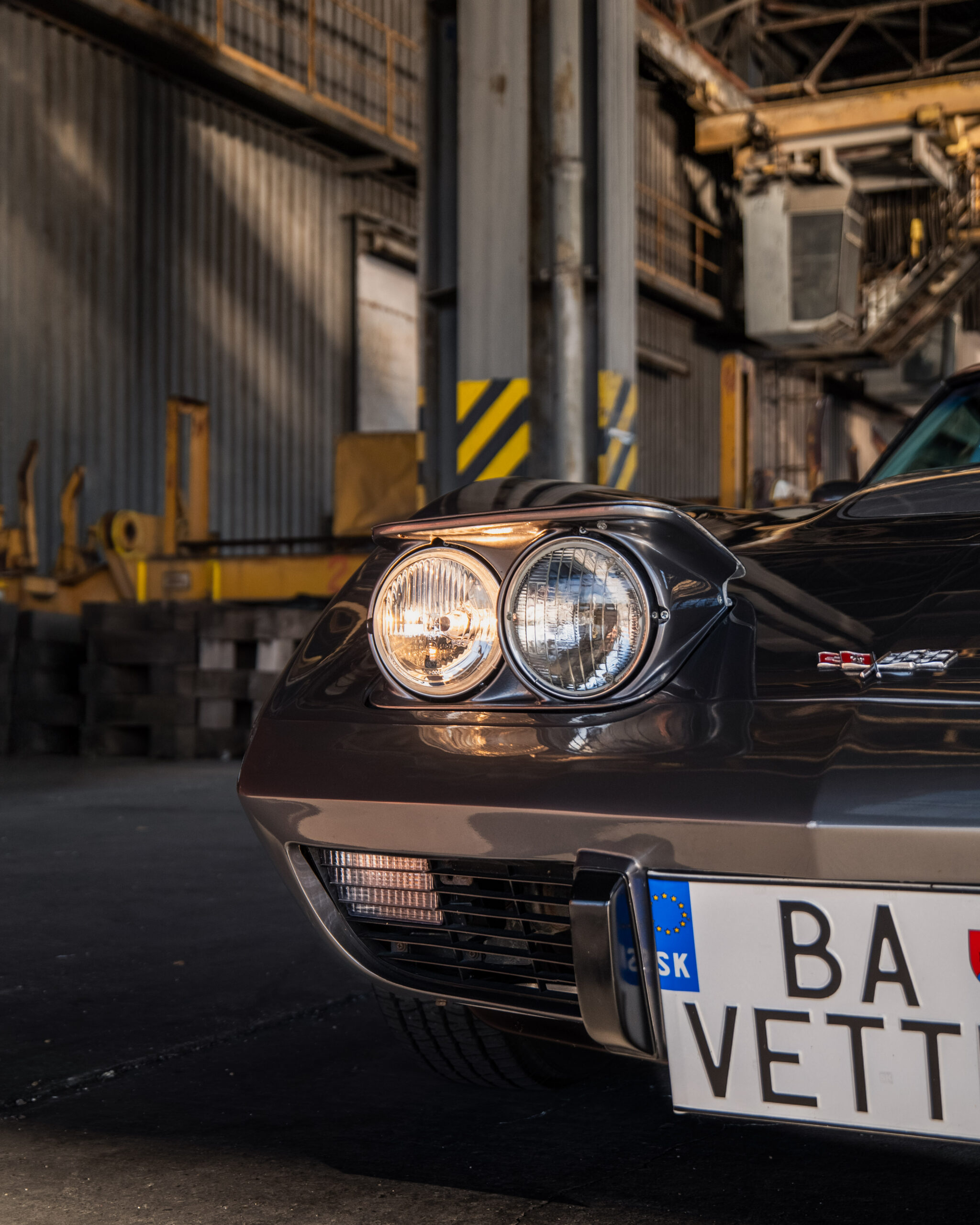
Why the “slow” years are the smart buy
For a long time collectors looked down on the mid-seventies C3. Less power, rubber bumpers instead of chrome, a catalytic converter. On paper these were the Corvettes to skip. Today that reputation is exactly what makes them interesting. They were built in bigger numbers than any Corvette before them, so they remain the most accessible way into a classic American sports car, and they still have the shape that made everyone stop and stare in 1968.
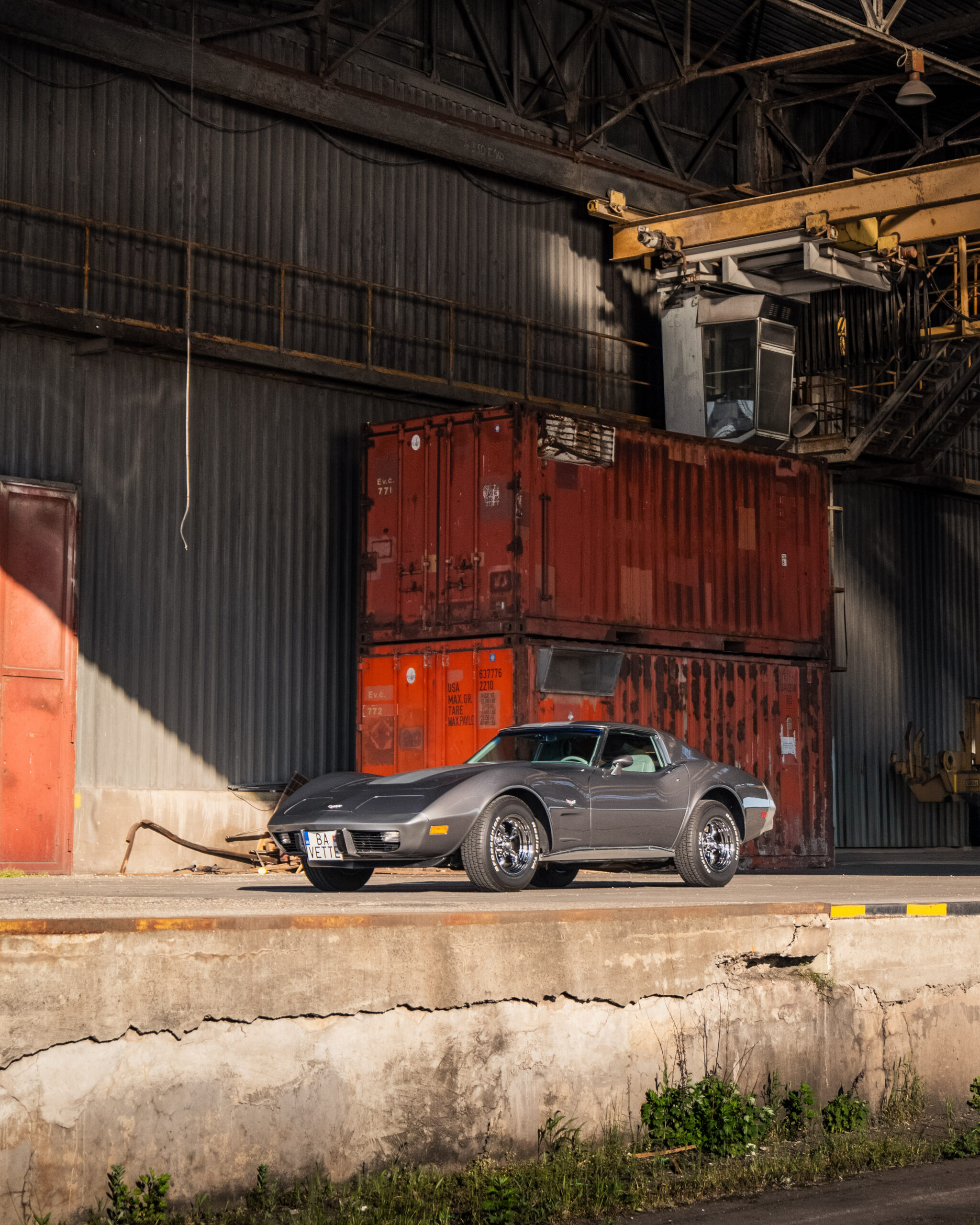
They’re also easy to live with. The small-block V8 shares its basic design with millions of other Chevrolets, so parts are cheap and every American-car specialist knows it inside out. The fiberglass body panels can’t rust, although the steel frame underneath still deserves a careful look before you buy. And the late tunnel-roof cars are the last with the upright rear window between flying buttresses. From 1978 Chevrolet replaced it with a big glass fastback, and the C3 never looked quite as sharp again.
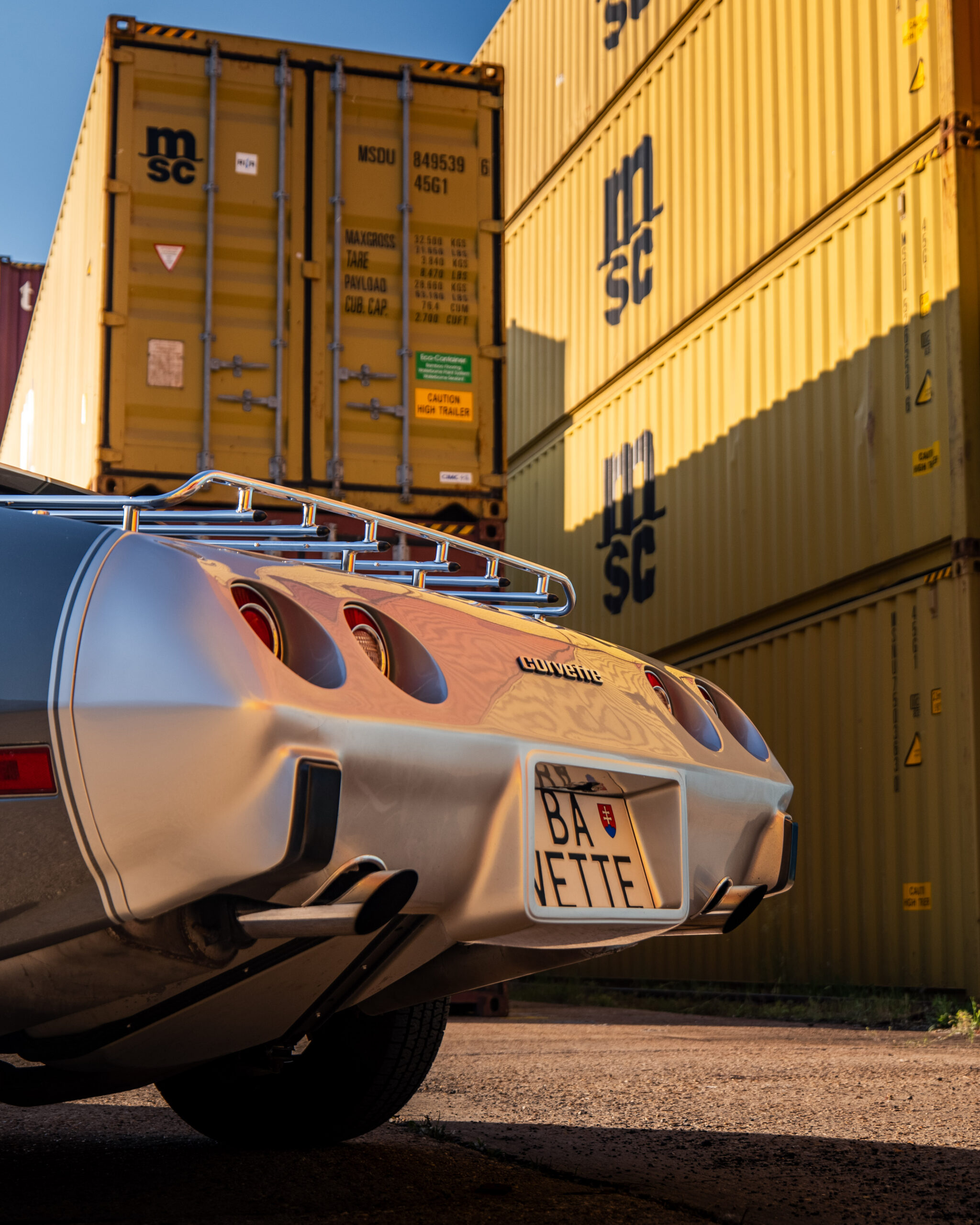
Getting in is part of the ritual. You step over a wide sill and drop into a seat that sits almost on the floor, legs stretched out, with a huge transmission tunnel at your side. Through the windscreen you see nothing but bonnet, with the two front wings rising like the edges of a wave. The C3 feels bigger from behind the wheel than it is, and that sense of occasion is a big part of its charm. On a warm day, the two roof panels come out and go in the boot, the first time a Corvette coupe offered that trick, and the car becomes almost a convertible.
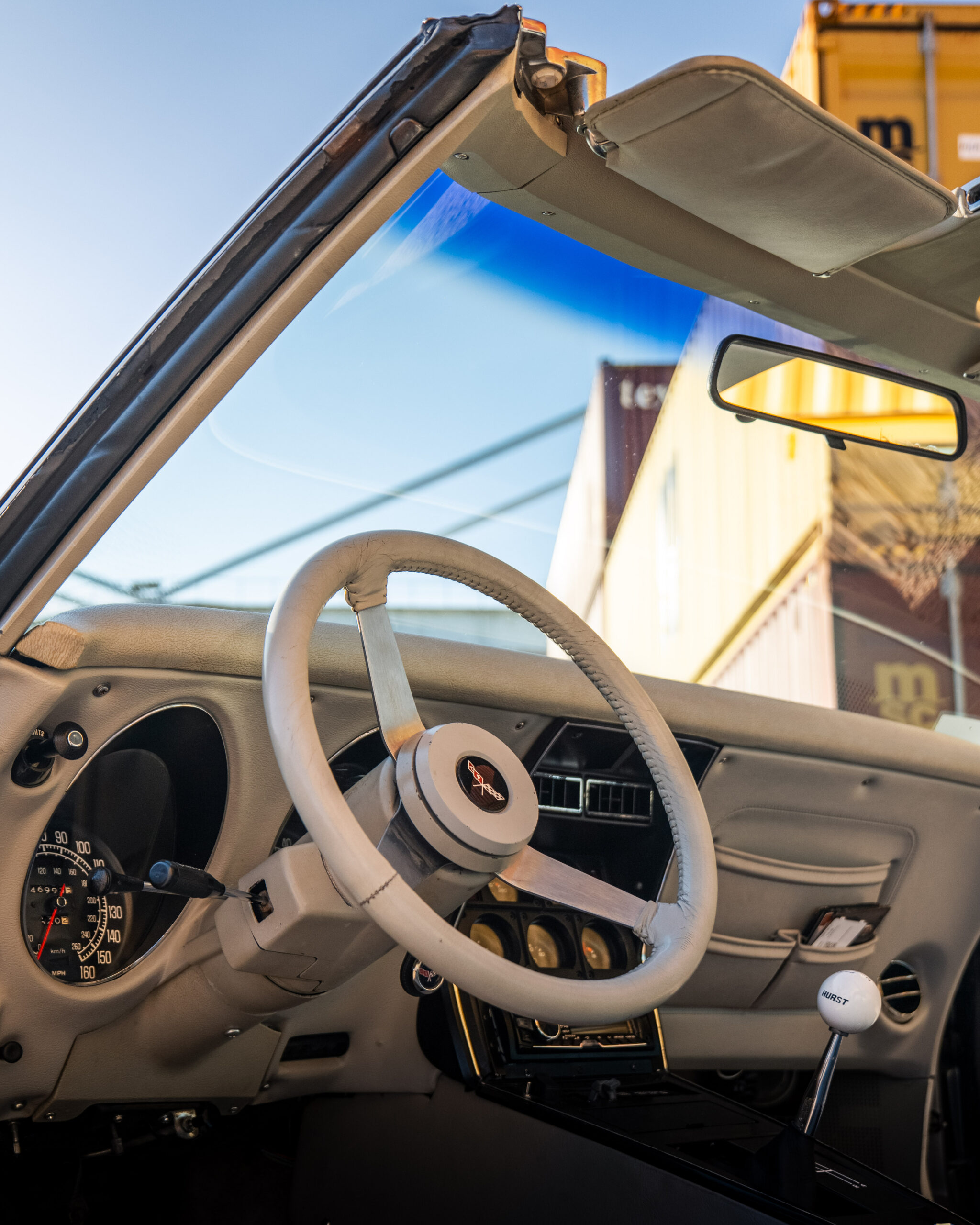
Small-block heart
The engine is Chevrolet’s 350 cubic-inch (5.7-litre) small-block V8, the most common motor in American performance history. In mid-seventies form the standard version made about 180 horsepower and the optional L82 a little over 200. The numbers are modest, but they were never the point. The point is low-down torque, a deep and lazy burble from the twin exhausts, and a shove that arrives the moment you touch the throttle.
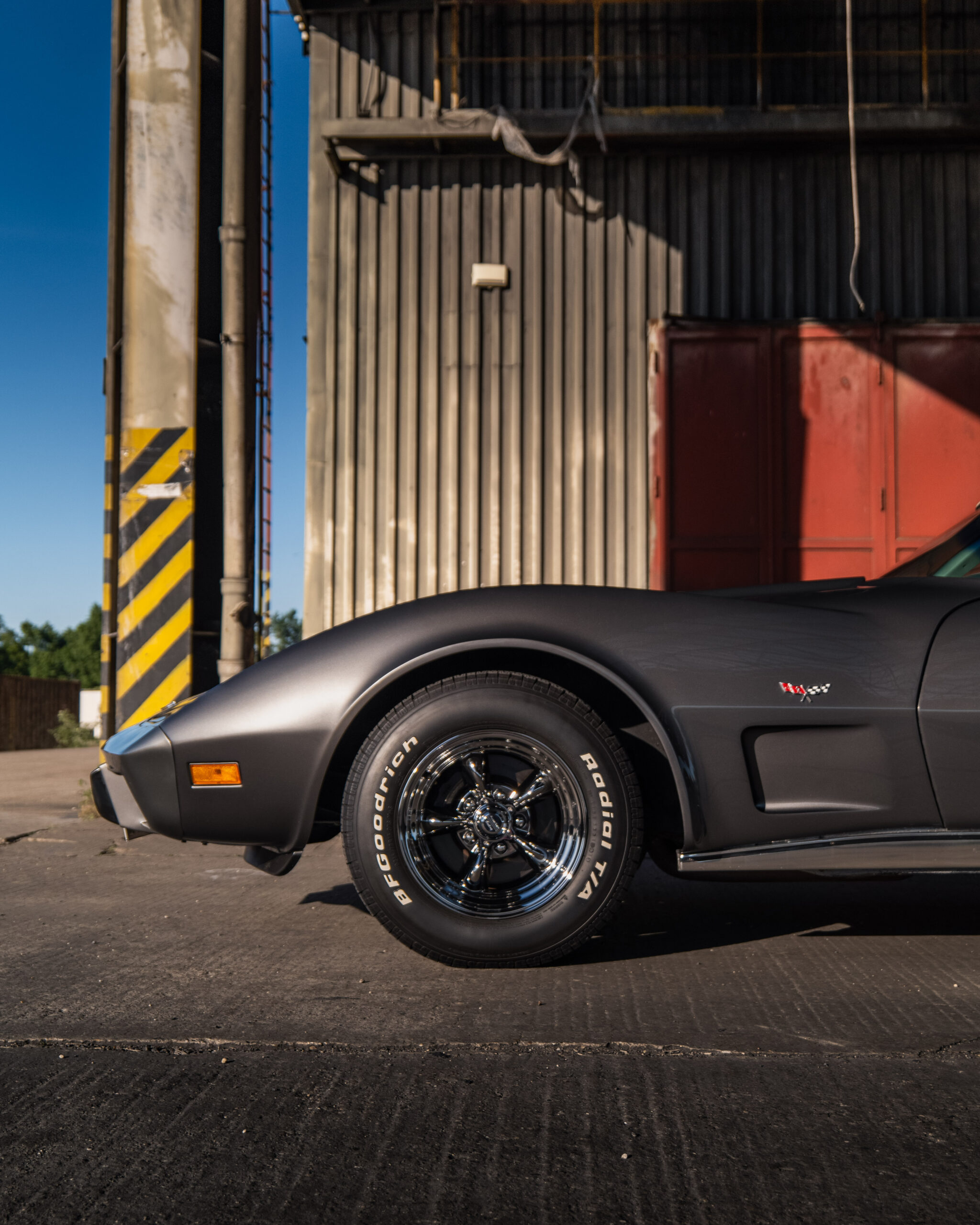
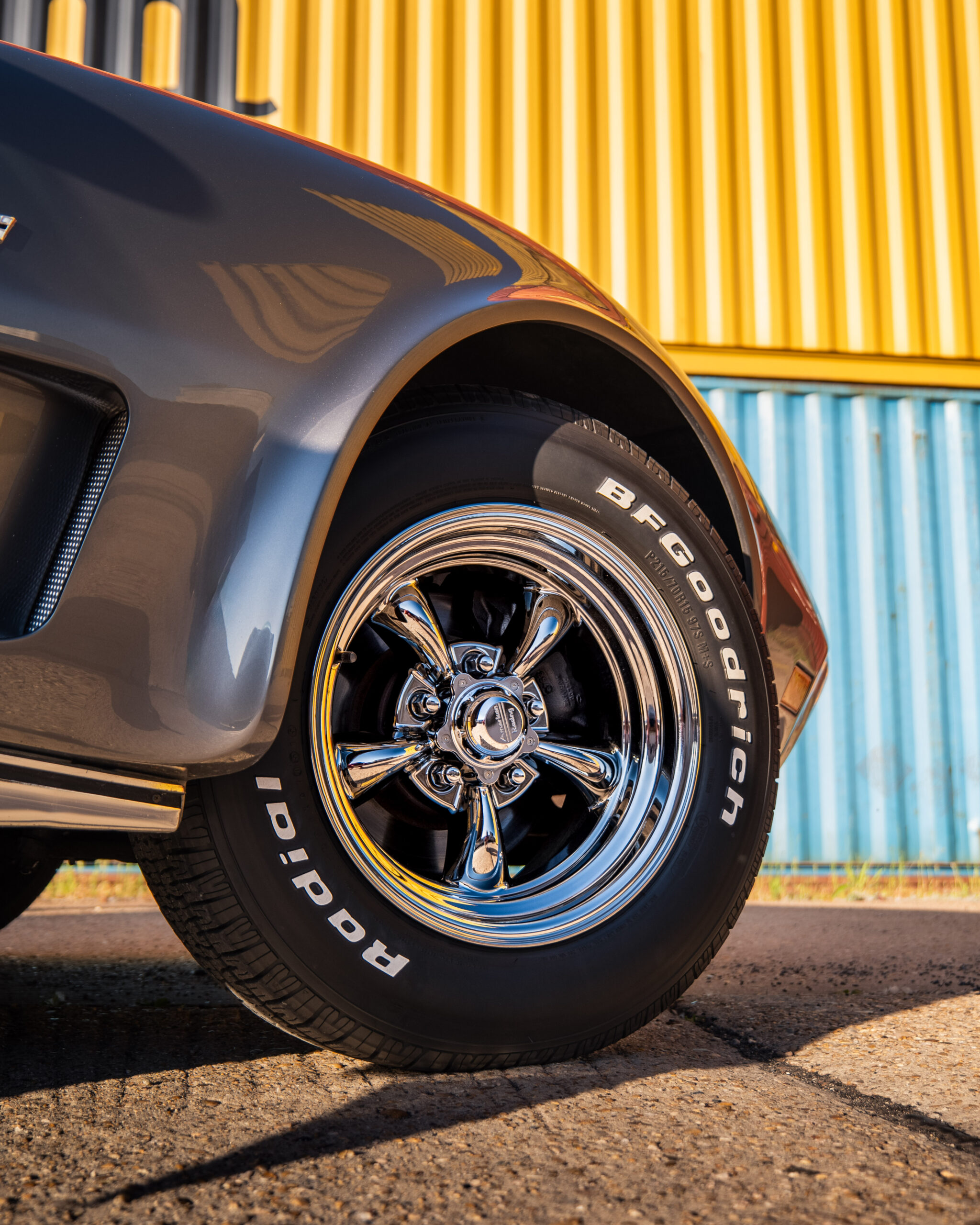
Underneath, the recipe is old-school but clever. There’s a steel ladder frame, a fiberglass body that never rusts, independent rear suspension with a transverse leaf spring, and disc brakes on all four wheels, something many European rivals of the day still couldn’t offer.
Behind the wheel
Period road tests and today’s owners tell the same story. By modern standards the C3 is not a precise sports car, and it doesn’t pretend to be. You sit low behind the endless nose and aim the car rather than place it. The steering is slow and a little loose around the centre, so on a twisty road you plan each corner early instead of flicking into it.
The V8 pulls hard from low revs, so there’s no need to wring it out. Short-shift through the four-speed and ride the wave of torque. The ride is softer than the looks suggest, but sharp bumps still thump through, and the fiberglass body answers rough roads with a few creaks and rattles. The brake pedal wants a firm, deliberate push. Go too fast into a corner and the nose washes wide, while a heavy right foot can swing the tail out quickly. The C3 rewards a smooth, unhurried driver.
None of that is a complaint. This is a car for warm evenings, roof panels in the boot and the V8 humming at a gentle cruise. Every gear change feels mechanical and every mile feels like an occasion.
Then and now
When it was new, the C3 split opinion. Magazines praised the looks and criticised the build quality, the cramped cabin and, as the seventies went on, an engine that kept losing power to emissions rules. The mid-seventies cars in particular became the punchline of the muscle-car era, all show and not much go.
Half a century later the view has changed. The shape that was once called excessive is now seen as one of the boldest designs Detroit ever put into series production, and the C3 is the Corvette many people picture when they hear the name. On the classic market, the rare chrome-bumper big-block cars from the early years are the ones collectors fight over and pay serious money for. The later small-block coupes remain one of the most affordable ways into a classic V8 sports car. That makes them the C3s people actually buy to drive, and that’s probably the best compliment a classic can get.
Verdict
The Corvette C3 isn’t the quickest classic you can buy, and it isn’t the sharpest. It’s something rarer, a car designed to make you look twice, built in an era that cared more about how a car made you feel than how fast it lapped a track. They don’t build them like this anymore. Thankfully, there are still a few out there.
Specifications
Gallery

Photos: Floor It